

The rollout had twelve dates and one slide. Site four was third on the list: a Tuesday in the second week, 09:30 to 17:30, forty-six operators, room booked, trainer flown in.
Nineteen people came.
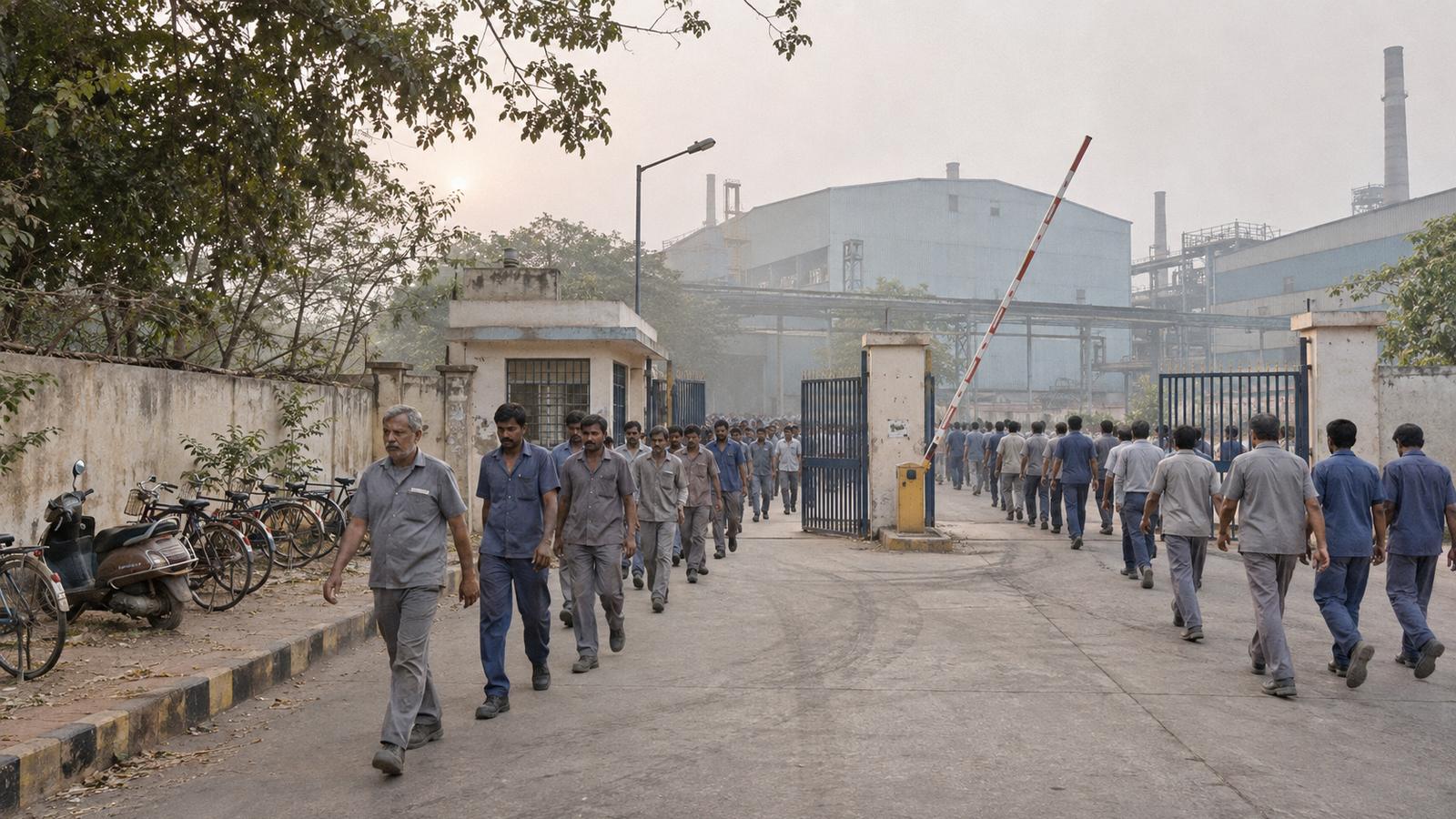
The other twenty-seven were on C shift. They had finished at 06:00 that morning and were due back at 22:00 the same night. The site HR lead had approved the date in February, when the roster for that week did not yet exist. Nobody had done anything dishonest. The calendar had simply been built from the wrong object.
A training day is a withdrawal of labour
Every rollout plan treats a training day as a slot in a diary. The plant treats it as a production decision, because that is what it is. Forty-six operators for eight hours is 368 operator-hours taken off a line that was scheduled to run. Somebody has to cover it, or the line rate falls, or the batch slips.
That is the whole failure in one sentence. The calendar asks when the trainer can come. The plant can only answer when these people can be released. Those are different questions with different data, and only one of them lives in the shift roster.
The usual fix is to add a column called “shift” to the planning sheet and keep going. It does not help, because a shift name is not a release window. You need the named crew, the date, the approved leave and the relief available that day. That is a roster, and it is a different document.
Three constraints the calendar never sees
The hour arithmetic is statutory, not cultural. Under the Factories Act, 1948, an adult worker cannot be required or allowed to work more than 48 hours in a week (section 51) or nine hours in a day (section 54). Work periods must be fixed so that no block exceeds five hours without a rest interval of at least half an hour (section 55), and the whole spread from start to finish, including those intervals, cannot exceed ten and a half hours (section 56).
Put a 09:30 to 17:30 session against that. It is eight hours in the room. For a man on the 06:00 to 14:00 shift it consumes his entire working day. For a man on 14:00 to 22:00 it means arriving four and a half hours early, which either breaks the spread-over or turns into overtime. For the C shift man who clocked out at 06:00, a 09:30 start leaves three and a half hours between shifts. The ILO’s fact sheet on rest periods puts the common legislative floor for daily rest at ten to twelve consecutive hours. Three and a half is not a rest period. It is a nap in a corridor.
Relief cover is a finite pool. Most plants have a floater pool, cross-trained operators who move between lines when someone is absent. It is sized for absence, not for training. Covering four people off sick is a different demand from withdrawing twenty people at once for three hours, and the pool has no way to say no. It just thins out until a line runs short and a supervisor cancels the next session.
The statutory notice has to move with the roster. Section 61 of the Act requires a notice of the periods of work for adults to be displayed, and section 63 requires the hours actually worked to correspond with that notice. Pull a crew forward for a morning session without amending the notice and the register, and you have created a record that contradicts itself. An inspector will find it. More immediately, the site head will refuse the next request, because he now has to clean up an administrative problem he did not create.
Build the window before the date
The order of work is the method. Dates come out of the roster at the end, not the start.
1. Ask for the roster, not the shift pattern. A shift pattern says A, B, C, rotating weekly. A roster says which named crew is on which shift on which date, plus approved leave, the shutdown calendar and the names in the relief pool. Ask for twelve weeks. If the site cannot produce one, that is your first finding, and it is worth more than a training date.
2. Mark the reachable window for each crew. Take the smallest unit of release that does real work: a half-day. For a 06:00 to 14:00 crew the window is roughly 09:00 to 13:00, because the first three hours of a shift are not negotiable. For a 14:00 to 22:00 crew it is 14:00 to 17:00. For a night crew it is the last three hours before the shift ends, when handover is done and the line is being cleaned. A three-hour window holds about two and a half hours of content once people walk in, settle and walk back.
3. Size the relief pool before you choose a batch size. Batch size multiplied by release hours gives the operator-hours you are removing. Floater count multiplied by available hours gives the cover you have. When demand exceeds cover, the line rate drops and a supervisor cancels the next session.
4. Set the batch size at what relief can carry, then read the dates off the roster. If two batches a day overdraw the pool, it is one batch a day. The number of sessions is arithmetic: headcount divided by batch size. You do not negotiate that number with the client. You show it and let the arithmetic do the arguing.
5. Rewrite the module to fit the window. Most providers design a six-hour programme and then hunt for six-hour gaps, which do not exist in a three-shift plant. A workable half-day block carries one demonstration, two practice rounds and one feedback round. Everything else becomes a one-page pre-read sent with the roster confirmation.
6. Amend the notice before the first session. It is one line in the site pack: which crews move, on which dates, and who signs the amended register. Sites that vary their delivery locally need this written down anyway, which is the same discipline behind keeping twenty locations on one design.
The comparison is simple.
- 09:30 to 17:30 session. A shift loses the day. B shift needs an early start that breaks the spread-over. C shift gets three and a half hours of rest. General shift works.
- Three-hour block inside the shift. A, B and C each get a usable window on the right day. No overtime. No spread-over change. Relief stays inside the pool.
A worked example, illustrative
A plant with 240 operators on three shifts of 80, ten lines, and a handover conversation module. The content is three hours; release is three and a half including settle time.
Twelve batches of 20 gives 240. One batch removes 70 operator-hours. The relief pool is 14 cross-trained floaters on an eight-hour shift, so 112 operator-hours, less a fifth for their own leave and training. About 90 usable.
One batch a day at 70 fits. Two batches at 140 overdraws by 50, which is cover that does not exist on the floor. So the plan is 12 sessions, one a day, three weeks at four days a week.
The dates then come off the roster. A session is booked only on days when that batch’s crew is on A or B and at least twelve floaters are present. In a four-week window that produced 14 usable days, so 12 sessions fit with two for slippage. Total withdrawal is 840 operator-hours, all inside scheduled shifts, none of it overtime.
The original plan was four full days, which would have removed 1,920 operator-hours and ended the conversation in the plant manager’s office. The difference is that one version was scheduled against a diary and the other against the floor.
If delivery spreads across several states the roster argument matters more, not less, because every site has its own relief pool and local rules. That is the part of pan-India delivery that never appears in a proposal.
In the room, the window changes the design
A 150-minute block does not hold a lecture. It holds one demonstration, two practice rounds and one feedback round, and nothing else.
The theory moves to a pre-read. The second practice round starts with a recall task on the first, which is the cheapest repetition you will ever buy. A trainer who has prepared for the specific cohort can run a 150-minute block without a slide deck and without losing the standard. A trainer who needs ninety minutes of framing will not fit, and you find that out in the design review rather than in the room.
Where this arithmetic fails
It fails in peak season. If the plant is running flat out and the floater pool is already covering absence, there is no window, and the honest answer is to run forty people now and the rest next quarter. Saying that costs you a quarter of the fee and keeps the programme alive.
It fails at a new plant where no one is cross-trained yet. Then relief is a hiring and training decision above the programme, and you should say so in the proposal rather than promising a calendar you cannot hold.
It does not apply unchanged to office populations. The statute binds factories, not a sales floor. But the structure is the same with one substitution: the calling window and the customer calendar take the place of the shift roster, and the relief pool is the colleague who covers the desk.
And do not dress the arithmetic up as precision. A roster is a plan, not a fact. Absence runs five to ten per cent even in a well-run plant, so build one buffer day per two weeks and expect to use it.
Monday morning
Take the site that failed last time. Ask for the roster for the next four weeks. Draw three rows, A, B and C, and mark every half-day window where a batch can be released and the floater pool is intact. Count the marks. Divide headcount by batch size. If the marks are fewer than the batches, the date you were about to confirm does not exist, and it is better to know that on a Monday than on the Tuesday in the second week.
Then send the site head one page: the windows, the batch count, the floater requirement and the amended notice. That page is the rollout plan. The calendar is only its shadow.
If the programme needs a design that fits the window rather than a window found for the design, that is consulting work before it is training work.
Sources
https://www.dgms.gov.in/writereaddata/UploadFile/The_Factories_Act-1948.pdf https://www.ilo.org/media/432706/download