Short pieces on transfer, competency design and measurement. Written from live programmes, not theory.
 Consulting · 20 Nov 2026
Scope creeps because discovery collects symptoms instead of forcing decisions. Five questions, asked in order, turn a vague brief into a one-page scope note you can price and defend.
9 min read Leadership
A cohort rarely dies because dates were cancelled. It dies because its evidence lived in the room. Three artefacts, built before the disruption, keep twenty-four supervisors in the programme.
 Train-the-trainer
Improvisation in a classroom is a preparation state, not a personality trait. The four things a trainer must know cold before departing from the plan, and the blank-page test that proves it.
 Assessment
"Most assessment centre reports rank candidates instead of showing evidence, so the hiring manager forwards a verdict nobody can check. A one-page format with three evidence bullets per dimension fixes that."
 Coaching
"Most call reviews end with a list of faults and a nodding rep. A fifteen-minute structure built on three questions puts the rep's attention on the call, not on the verdict."
 Assessment
"The candidate who talks most usually wins the group exercise, and that is a measurement error rather than a judgement. A contribution map with four countable moves separates chairing the discussion from filling it."
 Assessment
"Most in-tray scoring rewards the number of items a candidate touches, which makes a prioritisation test into a typing race. A three-way triage rule and a delegation standard fix the answer key."
 Competency
Most competency anchors describe a conclusion, so two managers watching the same person reach different ratings. Here is the wording test that fixes it, and how to pilot an anchor set in one afternoon.
 Coaching
"Coaching fails at the boundary with the manager's own work, not inside the session. Three clauses to sign before session one: what the manager stops doing, what they get told, and what happens if nothing moves."
 E-learning
Most blends are a video library with a workshop bolted on. Design the chain so each stage consumes the last one's output, and skipping a step becomes visible on the floor.
 Leadership
First-line managers are promoted for technical work and judged on people work. Replace the leadership philosophy with three recurring conversations, each with a script and a checkable artefact.
 AI training
"Most AI literacy budgets buy awareness and no change. Pick three recurring manager tasks with a readable artefact, and show the before and after for each."
 Transfer
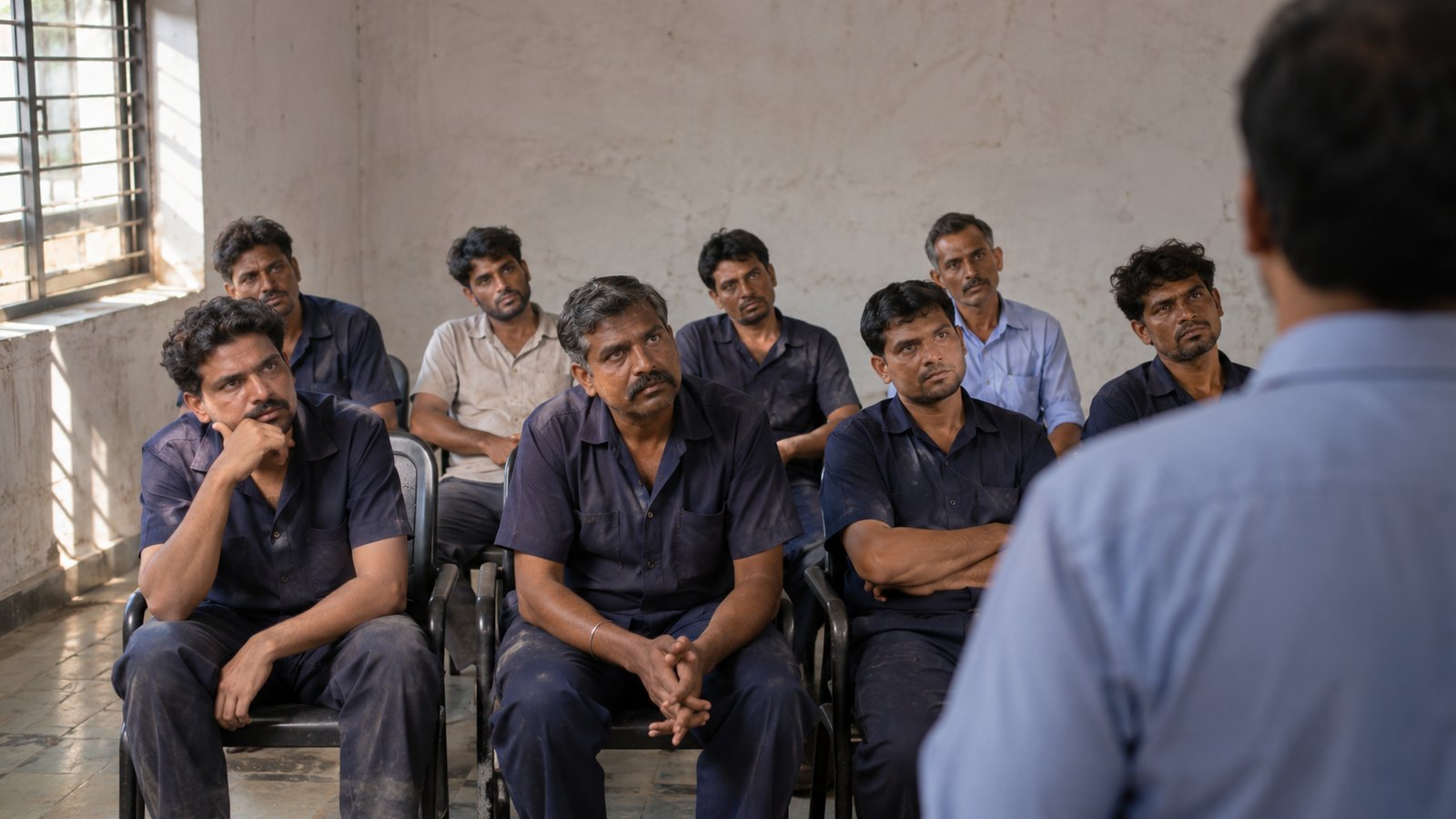
"A plant-floor brief is not a shorter classroom brief. Fix the window, one behaviour, one object and one return, and forty minutes can still change what happens on the line."
 Assessment
Two assessors, same eight minutes of behaviour, ratings two points apart. The exercises are rarely the problem. Rewrite the anchors, rotate the pairs and run a calibration hour before scoring starts.
 Coaching
"Before a coaching engagement ends, hand the manager three small artefacts: a behaviour card, a practice calendar and a review agreement that protects confidentiality."
 Measurement
A sponsor who asks only for headcount will not fund an impact study. Keep their number, then quietly add one leading indicator: a rate finance can audit, built from data the business already collects.
 Delivery
Consistency across sites is a design decision about what is fixed and what is local. Here is the one-page ledger, the site pack and the five-field return that prove a programme ran the same way twice.
 Transfer
Sales behaviour is watched and corrected every week, so an unpractised new skill is pulled back in days. Build the reinforcement around the call review, not the workshop.
 Train-the-trainer
Internal trainers do not read a 90-page facilitator guide in the room. Here is the four-page handover that survives a real cohort, with the run sheet, the failure scripts and the observation checklist written out.
 Consulting
Most training needs analyses are a list of requested courses with the word need added. Here are the three questions that turn that list into a gap statement you can design and measure against.
 Training trends
The phrase covers three different purchases. Most buyers compare on price and module count, then wonder why nothing changed. Here is the comparison that actually predicts whether your team will work differently.
 Transfer
The workshop is rarely the problem. What happens in the four weeks after it decides whether anything changes, and that window is designed before the session, not after.
 Competency
Most frameworks fail not because the behaviours are wrong, but because nobody can hold twelve of them in their head at once. The fix is subtraction, not more workshops.
 Measurement
Kirkpatrick is not wrong, it is routinely faked. Here is the smallest honest version of the model we can actually run for a client, and what it costs in time.
Looking for the older archive? All previous articles.